

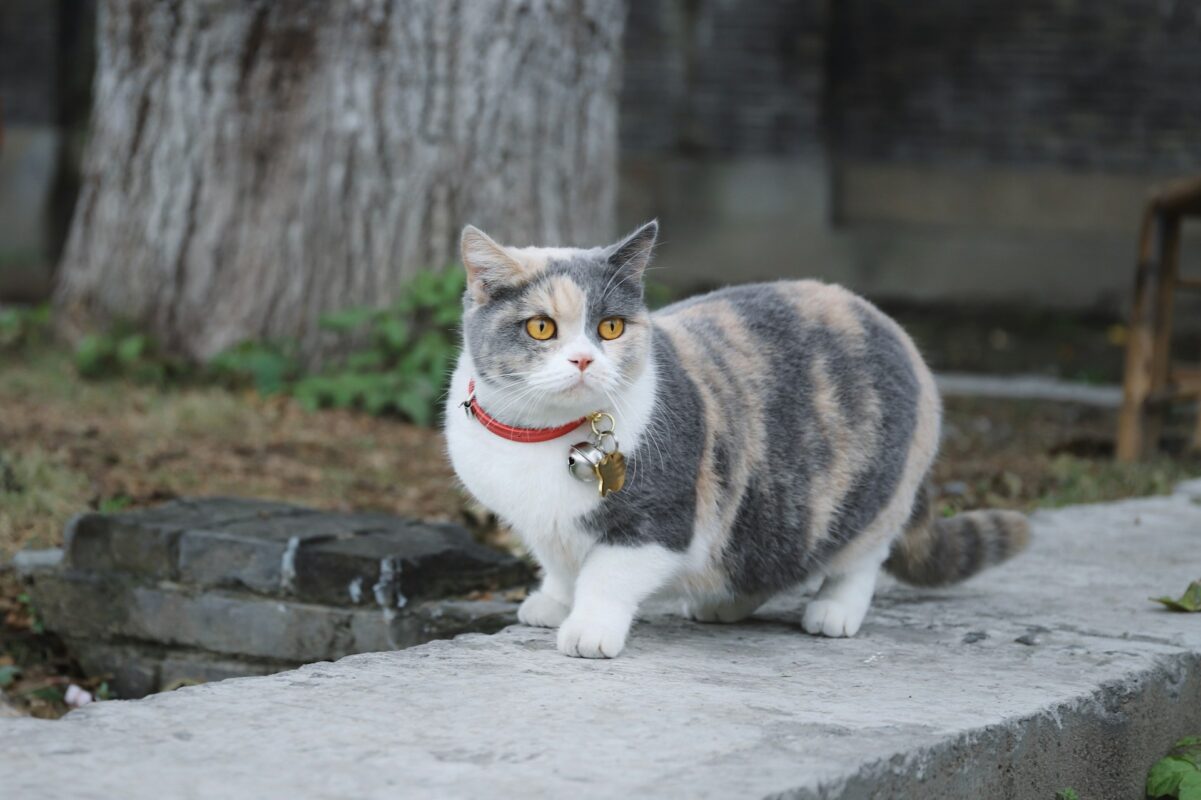
Munchkin cats are one of the strangest-looking cat breeds, perhaps due to their unique short legs. This corgi-shaped cat breed has captured the hearts of many cat lovers nationwide and has caused much controversy in the cat world. They are considered the “corgis” of the feline world.
Like any other cat breed, they love to wrestle and play with other cats, but their short legs make them unique. Even though they have short legs, they have a standard physique. Their body is not minuscule; they are sturdy and compact animals.
Their back legs are longer than their front legs. Though their short legs don’t allow them to jump high, they are good at moving and turning quickly. If you want to know more about this adorable cat breed, look at these 11 interesting Munchkin Cat facts.
Table of Contents
1. They Are Fast And Furious
Munchkin cats are easily identifiable by their short legs, which allow them to be incredibly fast. They possess a remarkable amount of energy, enabling them to move with both speed and agility. These feline creatures can swiftly maneuver around corners, resembling a furry race car, while maintaining a low profile close to the ground to maximize traction.
Munchkin cats possess exceptional speed but have limited jumping abilities due to their short legs. Despite this, they are capable of leaping onto furniture and climbing similar to other feline breeds.
2. Munchkin Cats Are Active And Healthy Breed
It is common for these cats to have a healthy and regular lifespan without encountering any issues related to their hips or spine. However, it is important to obtain your cat from breeders who provide a written guarantee of their health. To ensure your cat remains in good overall health, it is crucial to prevent obesity problems by carefully monitoring its diet and maintaining an appropriate weight.

3. Munchkin Cat Origin Is Very Interesting
It is said that Sandra Hochenedel rescued two pregnant cats from a Bulldog attack and adopted one. She named a kitten Blackberry. When Sandra’s cat gave birth, almost half of the kittens had short legs. She gave a male kitten named Toulouse to her friend Kay LaFrance.
As Toulouse was not neutered, short-legged cats started to multiply in Monroe, Louisiana. Realizing they had discovered a new cat breed, Sandra and Kay contacted Dr. Solveig Pflueger from the TICA Genetics Committee. Dr. Pflueger collaborated with Dr. David Piller to study the genetics of short-legged cats. Their research confirmed an autosomal dominant trait that affected the leg bones. Today, munchkin breeders recognize Blackberry and Toulouse as the ancestors of modern Munchkin cats.
4. Breeding of Munchkin Cats Is Quite Controversial
The argument arises when discussing the breeding of this unique breed. Despite being recognized by the International Cat Association in 1995, Munchkin cats remain unrecognized by the Cat Fanciers’ Association and the American Cat Fanciers Association. Many deem the breeding of Munchkin cats as unethical due to its potential promotion of physical deformities.
5. Munchkin Cats Have a Unique Standing up Habit
Munchkin cats have striking similarities to Scottish Fold cats in terms of their posture, whether it’s standing, sitting, or lying down. They are known for their amusingly human-like positions and can perch on their hind legs like ferrets or prairie dogs, possibly due to their slightly longer hind legs. This unique trait was so evident that in the 1950s, a short-legged cat in Russia earned the nickname Stalingrad Kangaroo Cat due to its tendency to sit on its haunches.

6. Munchkin Cats Come In Different Leg Lengths
Not all Munchkin cats have short legs, which may come as a surprise. Some of the taller cats within this breed may appear to be normal because they do not inherit the heterozygous gene at birth. These kittens have leg lengths similar to other cat breeds. The Munchkin cats with reasonably short legs are referred to as Super Short, while those with the shortest legs are known as rug huggers or dwarf cats.
7. They Come In Different Coats Types
Munchkin cats have various coat types, adding to their interesting characteristics. The short-haired ones typically have medium plush coats, while the long-haired ones usually possess semi-long silky coats. Generally, they require minimal grooming. Brushing long-haired cats twice a week and short-haired cats once a week is sufficient to keep them looking their best.
8. They Are Sociable And Love Cuddles
They have a strong desire for companionship that extends beyond children, dogs, other animals, and strangers. They never turn down the opportunity to snuggle on a warm lap. They take pleasure in reconnecting with everyone they encountered during their kittenhood. Munchkins thoroughly enjoy curling up next to someone who can provide a sense of protection, warmth, and security while they sleep.

9. Munchkin Cats Are Curious Creatures
Munchkin felines are recognized for their highly sociable nature and unrelenting inquisitiveness. However, unlike other cat breeds, they do not swiftly sneak up to satiate their curiosity. Instead, they perch on their hind legs and elongate themselves to observe what has captured their interest.
This behavior bears a striking resemblance to rabbits sitting upright on their elongated hind limbs. Typically, munchkins first acquire an optimal vantage point (often while standing on their hind feet) before embarking on their exploratory ventures.
10. Munchkin Cats Are Easy to Train
These amazing cats are easy to train; they can be trained to walk on a leash and play fetch with different cat toys or objects. A Munchkin cat will respond to your commands as dogs do. Cat Breeders say these skills come easier to Munchkins because they tend to be confident and intelligent.

11. They Look Like Kittens All Through Their Lives
They tend to maintain that kitten-like appearance throughout their lives, which makes them look adorable. This is one of the Munchkin Cat Facts that increased their popularity. Families with Munchkin cats can enjoy kittenhood far longer than others because these corgis-like cats never seem to grow.
Frequently Asked Questions
Do Munchkin cats have health issues?
Like all breeds of cats, Munchkins may be prone to specific health issues. However, the Munchkin breed is generally considered to be healthy and resilient. One of the potential health concerns associated with Munchkin cats is a condition known as lordosis. This is a spinal condition where the spine curves inward excessively, leading to difficulty in movement and breathing. However, this condition can be prevented with responsible breeding and regular veterinary care. Another potential health issue for Munchkin cats is arthritis, which may develop due to their shorter legs and unique body structure. This condition can be managed effectively with proper nutrition, exercise, and regular check-ups with a veterinarian.
Do Munchkin cats stay small?
Yes, Munchkin cats typically stay small due to their genetic makeup.
How long do Munchkin cats live?
Munchkin cats have a similar life expectancy to other breeds, typically between 12-15 years. However, with proper care and attention, Munchkin cats can sometimes live longer than this.
Can Munchkin cats jump?
Yes, Munchkin cats can jump despite their shorter legs. While their legs may be shorter than other breeds of cats, Munchkins can still jump and climb like any other cat.
However, it’s essential to remember that Munchkin cats may have a slightly different jumping style than other cats due to their unique physical characteristics. They may need more strength in their back legs to compensate for their shorter front legs and may not be able to jump relatively as high as other cats.
How much does a Munchkin cat cost?
On average, Munchkin cats cost anywhere from $500 to $2,000, with some high-end breeders charging even more. However, it’s essential to remember that the cat’s cost is only one aspect of the overall expense of owning a Munchkin cat. In addition to the cost of the cat, potential owners should also consider the ongoing expenses associated with caring for a cat, such as food, litter, toys, and veterinary care.
When is a Munchkin cat full-grown?
Munchkin cats typically reach their adult height and weight around 8-10 months. However, they may continue to fill out and gain muscle mass until they are closer to 2 years old. During this time, it’s crucial to provide your Munchkin cat with a balanced diet and regular exercise to ensure they reach their full potential in terms of growth and development.
Can Munchkin cats be left alone?
Munchkin cats, like all cats, are independent animals and can generally be left alone for short periods without issue. However, it’s essential to remember that cats are social animals and require interaction and attention from their owners to maintain their physical and emotional well-being.
Conclusion
In conclusion, Munchkin cats are a unique and fascinating breed that have captured the hearts of cat lovers worldwide. From their short legs and playful personalities to their striking appearance and impressive athletic abilities, there is no doubt that Munchkins are a breed that stands out. Whether you are already a proud Munchkin owner or simply an admirer of this breed, we hope these 11 exciting facts have deepened your appreciation for these delightful cats. Despite some controversy surrounding their breeding, Munchkins are a beloved breed that brings joy and laughter to many homes worldwide.
CAts are so cute
We just found out our kitten is a munchkin from our Vet. He has seizures and is being treated for epilepsy. Is this common?
Maybe you have a toxic plant in your home? We have covered a list of the most common household toxic plants to cats. https://catastic.pet/cat-advice/10-the-most-common-toxic-plants-for-cats/
Our munchkin is named Mocha. I’ve had cats all my life, but I have to say there really is something special about her personality. Just the sweetest and friendliest I’ve known. And of course, loves her family!
I would love to have a munchkin cat. Just dont know where to get one.